


Fractional CMO vs Marketing Agency: Which Is Right For You?
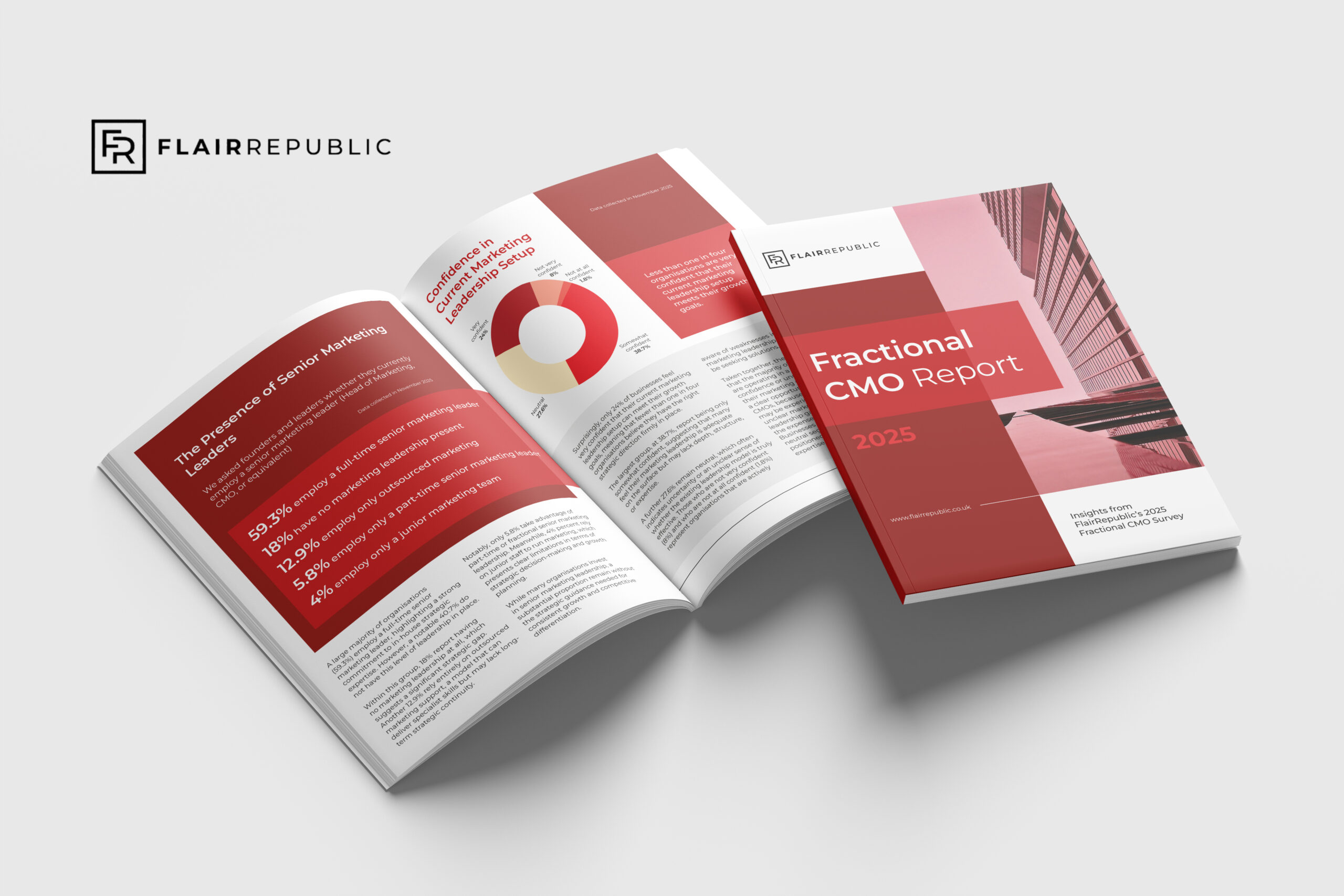
Something we’re often asked as a fractional CMO agency is why a business would choose a fractional Chief Marketing Officer over a traditional marketing agency. In our 2025 Fractional CMO Report, only 4.2% saw marketing agency support as their ideal model for marketing expertise, while 24% said they’d rather for opt a fractional CMO.
If you’re leading a growing business, it’s likely that marketing doesn’t feel simple. While our report offers a vote of confidence towards fractional CMOs, choosing between a fractional CMO and a marketing agency is about understanding what stage your business is at and whether you need leadership or delivery.
Strategy
With a marketing agency, it’s often expected that you already have a marketing team in place. It falls on the shoulders of your internal team to write the strategy. Now, when you consider that not every marketing team has a senior marketing leader in place, it makes the foundations of that strategy more shaky.
What we see repeatedly is that strategy becomes fragmented. Founders will often still own positioning. Sales teams define the ideal customer based on whoever closed most recently. Marketing plans are focused on activity rather than results Messaging evolves reactively. Budgets are allocated based on instinct instead of commercial reality. No one is failing, but there simply isn’t a senior marketing leader connecting everything together.
So marketing becomes a collection of tactics. A new channel gets added because competitors are using it. Campaigns are launched because they feel necessary. Content is produced because consistency matters. Activity increases, but direction doesn’t.
Marketing agencies are built to execute inside this environment. They work from the inputs they’re given. They deliver campaigns against briefs. But they don’t own the commercial architecture behind those decisions.
A fractional CMO does. They begin by understanding where revenue actually comes from, which customer segments are profitable, how long the sales cycle really is, what objections stall deals, where leads fall out of the funnel, and which channels can realistically scale. Only then is marketing designed.
Instead of asking what to run next, the focus shifts to what will genuinely move the business forward.
That change alone often transforms performance.
Internal vs External Input
When working with a traditional marketing agency, they usually sit on the outskirts of your business. Progress happens through weekly or monthly calls, and momentum depends heavily on the quality of your input and feedback. That’s not to say agencies can’t achieve excellent results, but their effectiveness is limited by how much context they have.
They don’t hear sales conversations. They don’t sit in leadership meetings about pricing or product direction. They don’t experience the pressure of payroll or missed forecasts. So marketing decisions are made at arm’s length from the commercial reality of the business.
A fractional CMO works differently, operating inside your organisation and collaborating directly with your internal teams. They understand margins, customer lifetime value, and growth targets. Because a fractional CMO is embedded into your business, marketing decisions are made in context, rather than isolation.
Instead of translating strategy to an external supplier, marketing becomes part of leadership. Consequently, priorities become clearer and execution becomes faster because alignment already exists. Marketing stops feeling like a service and starts functioning as a growth engine.
Ownership and Accountability
While marketing agencies are typically accountable for outputs, a fractional CMO is accountable for outcomes. A marketing agency will focus on deliverables like campaigns launched, content delivered, and ads managed.
Meanwhile, a fractional CMO will focus on pipeline quality, acquisition efficiency, conversion rates, sales velocity, and revenue contribution. They get to know your business inside and out, so any activity has depth. They’ll fix broken funnels, remove friction between sales and marketing, challenge assumptions about positioning and audience, and ultimately decide what to stop doing.
This is uncomfortable work, but it’s where growth actually happens. It keeps marketing focused on results rather than just activity.
Cost and Commitment
Hiring a full-time CMO is a significant commitment, both financially and structurally. For most businesses, it’s not just the salary that matters. It’s the long-term overhead, the onboarding time, and the expectation that one person will immediately have all the answers.
At the same time, relying solely on agencies often means investing heavily in execution before strategy is fully formed. While agencies solely focus on execution, they also come with pretty hefty fees.
A fractional CMO sits in the middle, making marketing leadership both accessible and affordable. A fractional CMO can step in, stabilise your marketing function, build the foundations, and help you scale with intent, rather than locking you into a structure you may outgrow. It’s about making sure your investment in marketing is guided by someone who understands both growth and reality.
Capability Over Dependency
One of the biggest differences between a fractional CMO and a marketing agency is what happens inside your business over time.
Agencies deliver work while fractional CMOs build capability.
A fractional CMO will develop your internal team, introduce structure, and implement reporting that leadership can actually use. Rather than focusing on short-term tactics, they help your business learn how to think about marketing strategically.
Over time, this reduces dependency on external suppliers. Your team becomes more confident. Decision-making improves. Marketing stops living in silos and starts operating as part of the wider business. Instead of renting expertise, you’re embedding it.
When a Marketing Agency Makes Sense
There are many situations where a marketing agency is exactly the right choice.
If you already have strong marketing leadership in place, your positioning is clear, your funnel is defined, and you know which channels work, agencies can be incredibly effective at scaling delivery. In this scenario, they provide valuable execution power and specialist expertise.
They’re doing what they’re designed to do.
When a Fractional CMO Makes Sense
A fractional CMO becomes invaluable when marketing feels busy but unfocused, when sales and marketing aren’t aligned, when growth feels unpredictable, or when founders are still driving messaging by default.
It’s also the right move when you’re scaling and need structure and accountability, but aren’t ready for a full-time CMO.
This is where many growing businesses find themselves. They recognise that direction is more important than uncertain tactics.
Final Thoughts
It’s important to remember that growth doesn’t happen from doing more. If marketing feels harder than it should, it often means your in need of solid leadership. Strategy is your greatest asset to making sure your marketing is going to land, and that’s why it needs to be thorough. When a fractional CMO creates this, they’ll lead with confidence and marketing results will happen more naturally.
When strategy is built with insight, marketing stops being a collection of disconnected tactics and starts driving real results.